














A Webflow site that shows departments the course before they buy.
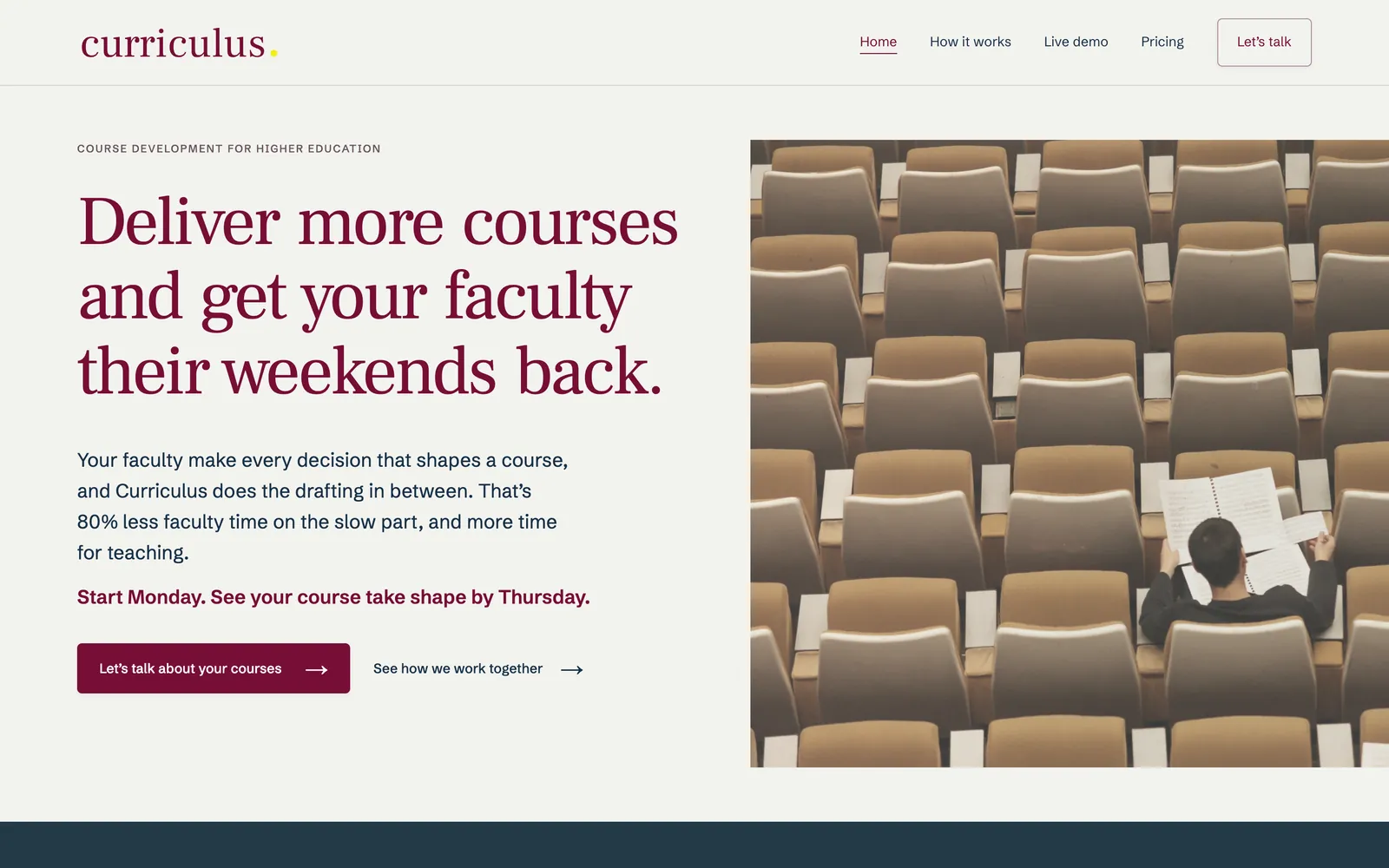
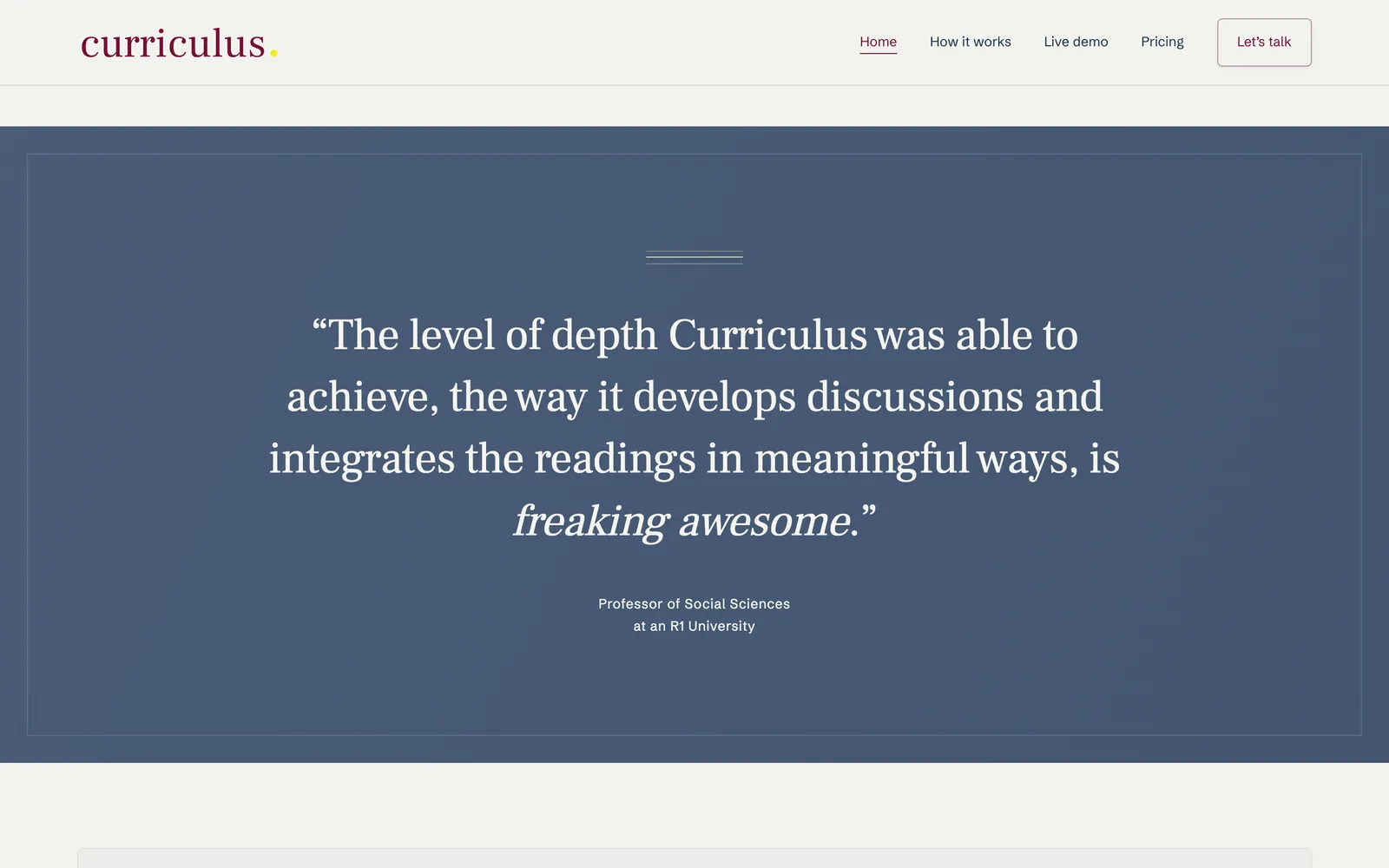
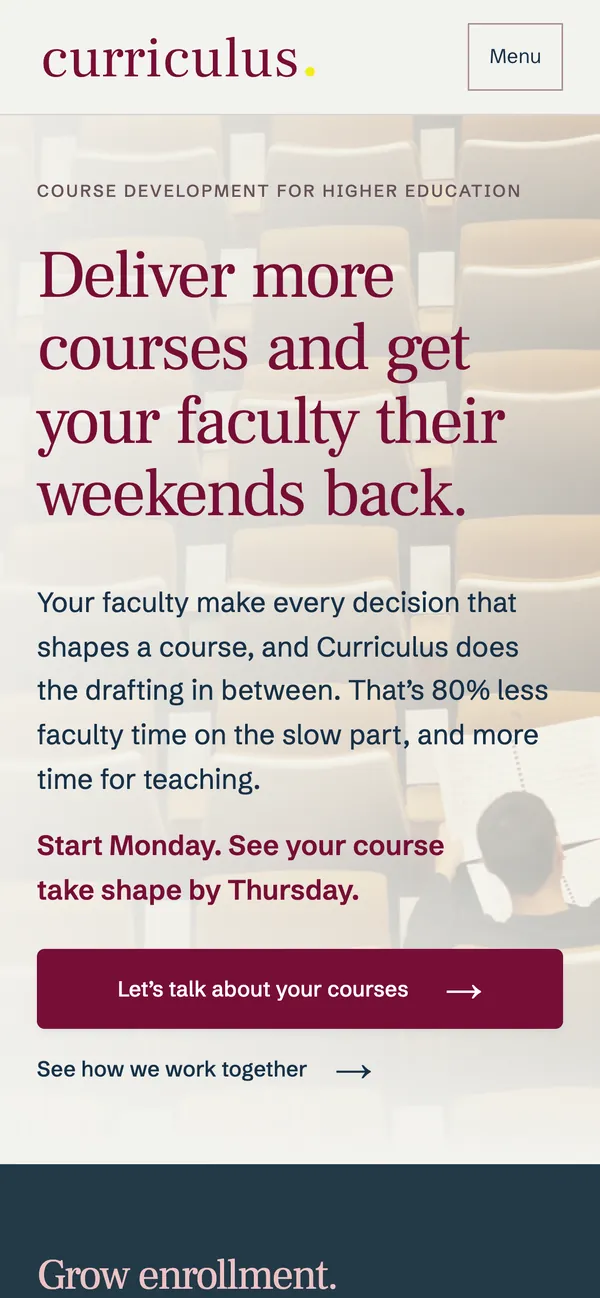
Curriculus asks departments to trust an outside team with their courses. We built a Webflow site that answers their questions in order. How it works, what the faculty receive, what it costs and how to start.
- Client
- Curriculus
- Sector
- Online courses
- What we did
- Web design, Webflow development, Messaging and site structure, Pricing estimator
- Built to drive
- More course creators.
- Live site
- curriculus.com
The problem
A service that is hard to picture until you see the output.
Course development sounds abstract to a department chair. The questions that decide a purchase are practical: how much faculty time it takes, what the materials look like and what a course costs. Curriculus also has to win over the faculty themselves, because they make every academic decision.
- Buyers need to see real course materials before they commit.
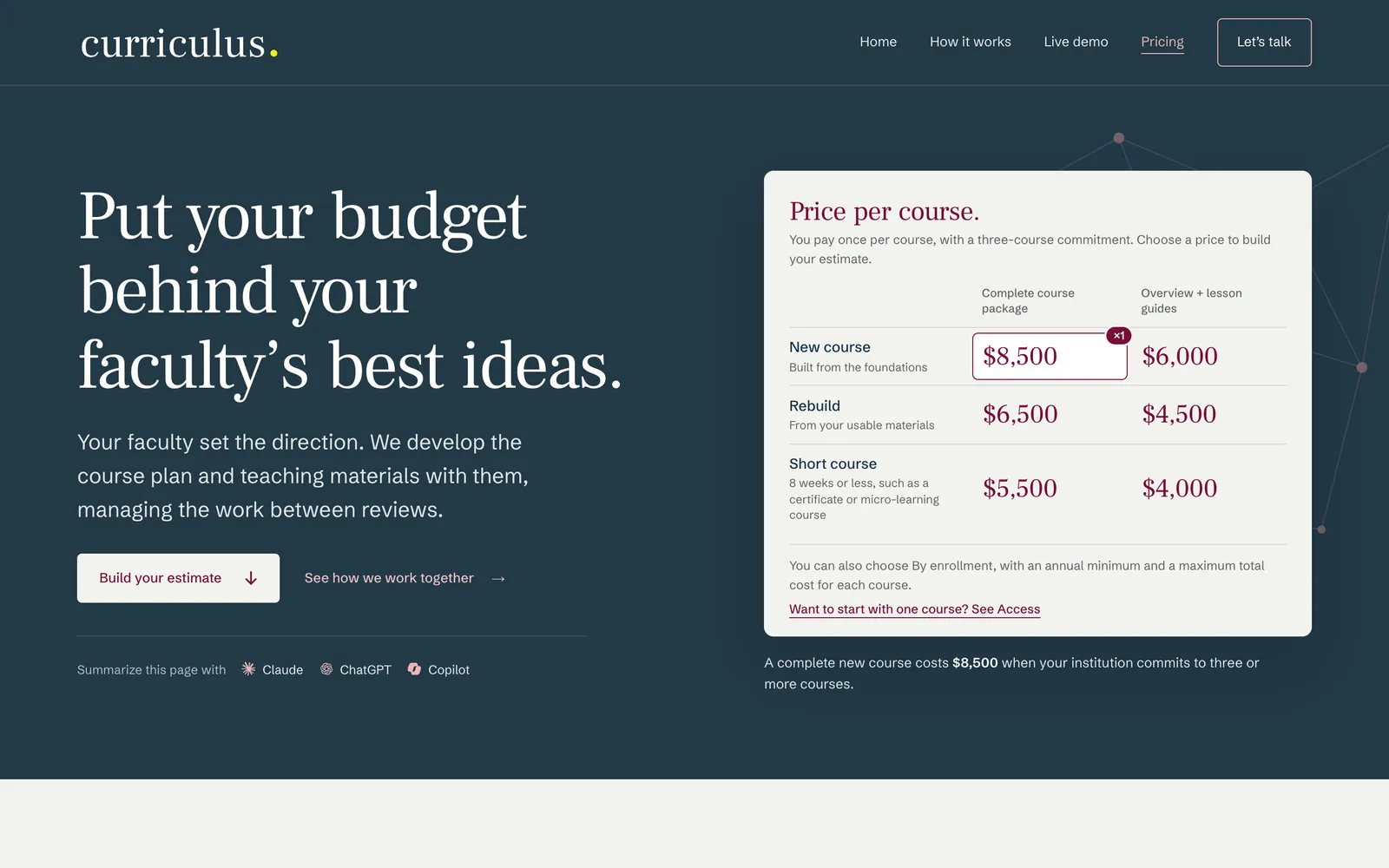
- The price depends on the type of course and how many a department orders.
- Faculty have to see that they stay in charge of the academic calls.
The solution
Show the work, show the price, then ask for the conversation.
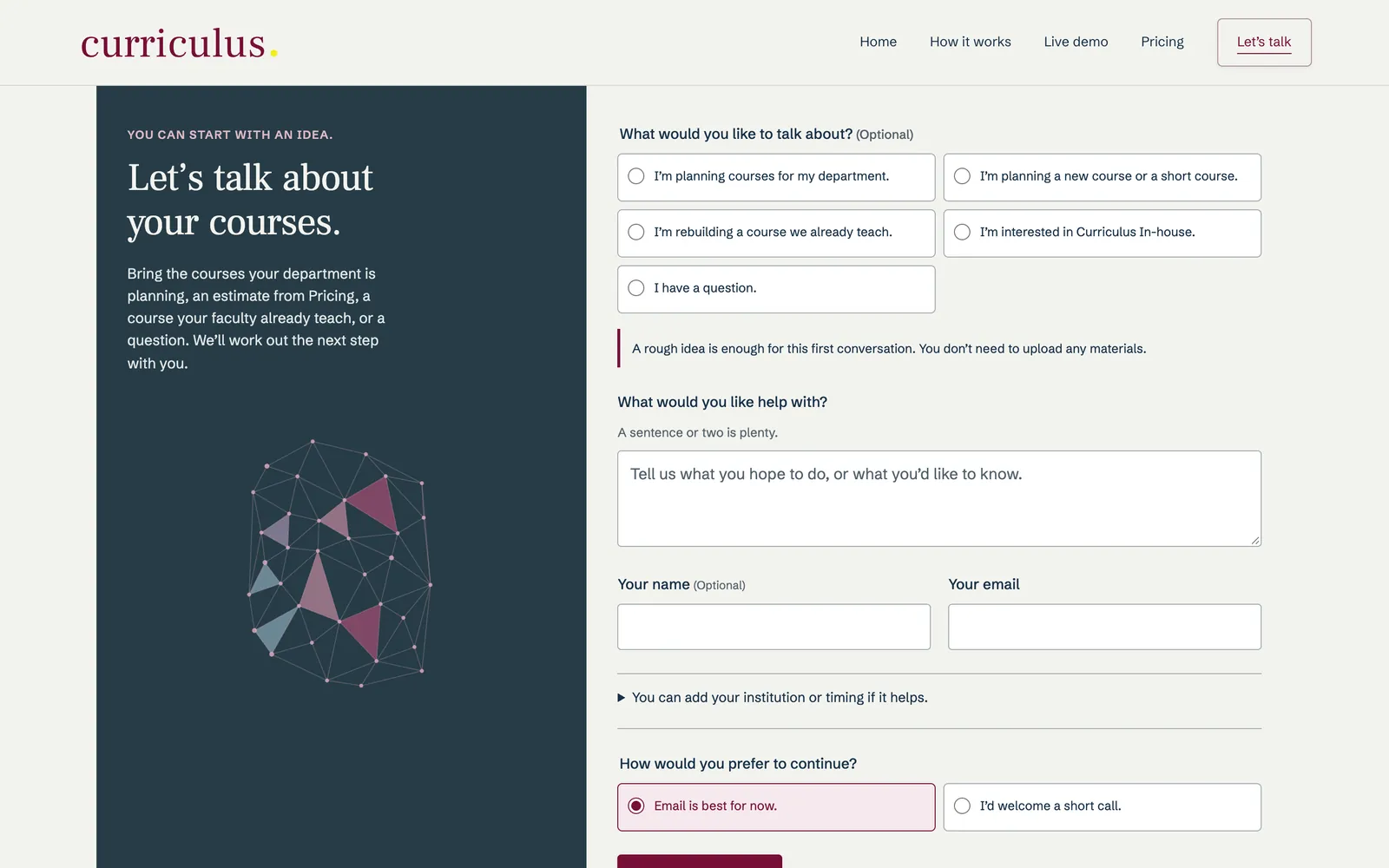
We built the site around evidence. A live demo page shows a real course, and a pricing page lets a department build its own estimate. The contact page then invites them to bring that estimate into the first conversation.
Our intervention
What we built.
Each page answers one question a department asks before it signs.
- 01
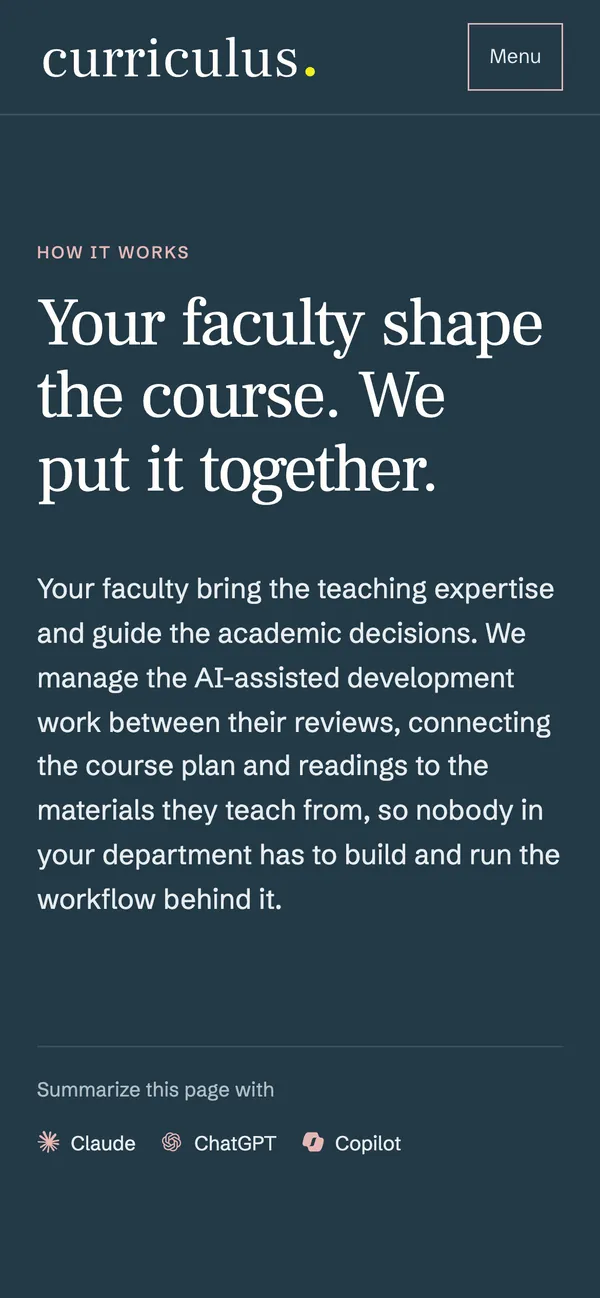
How it works
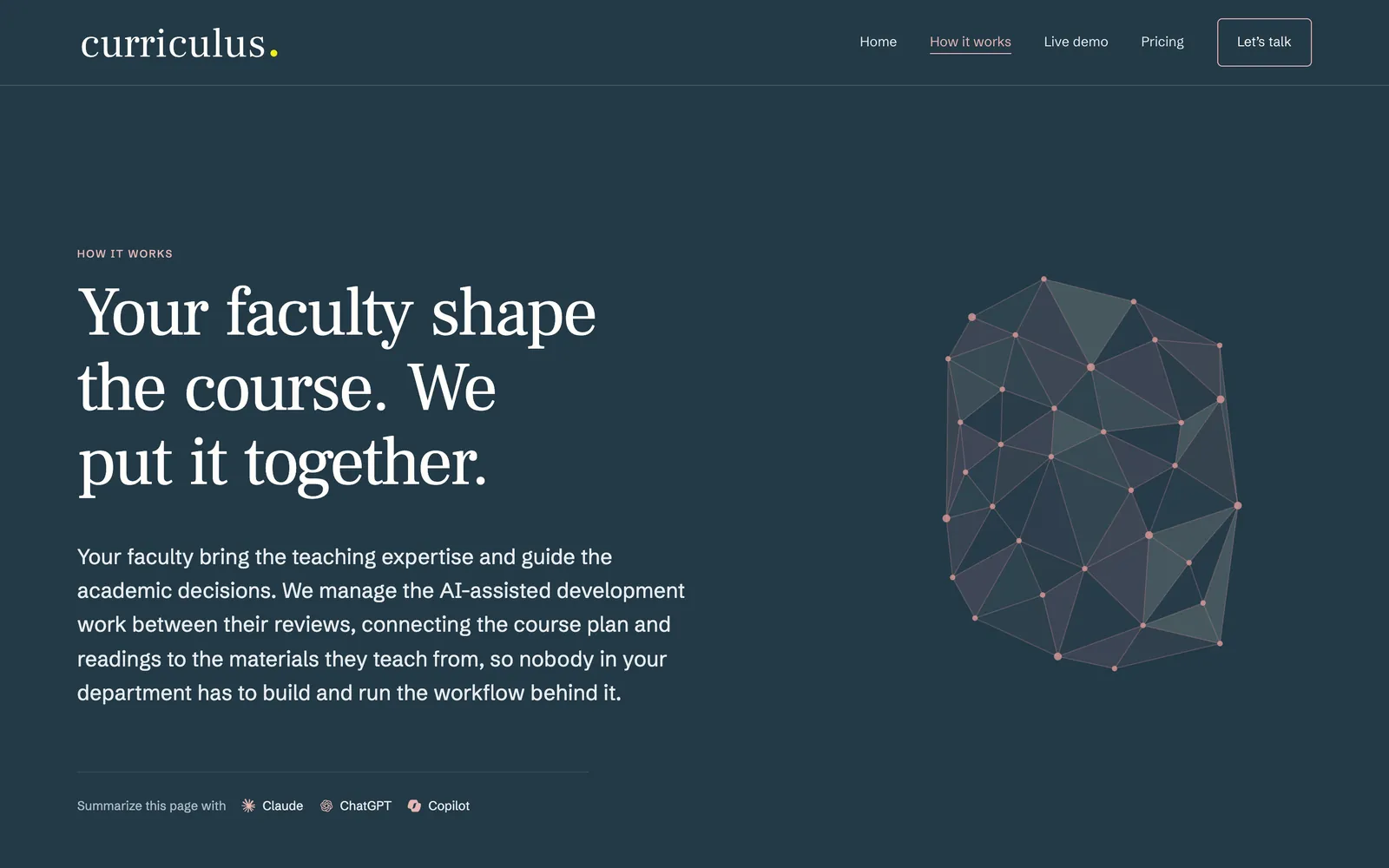
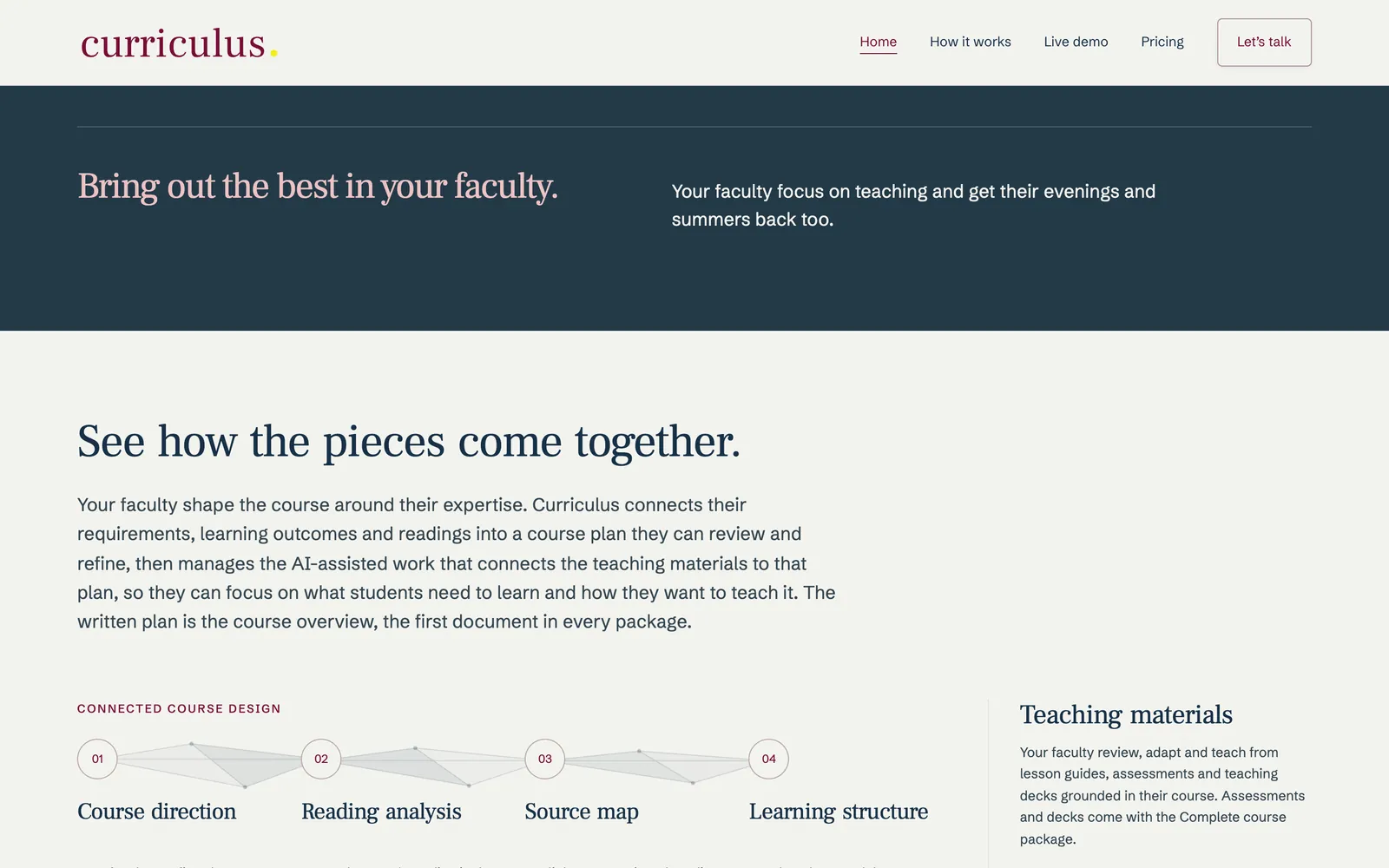
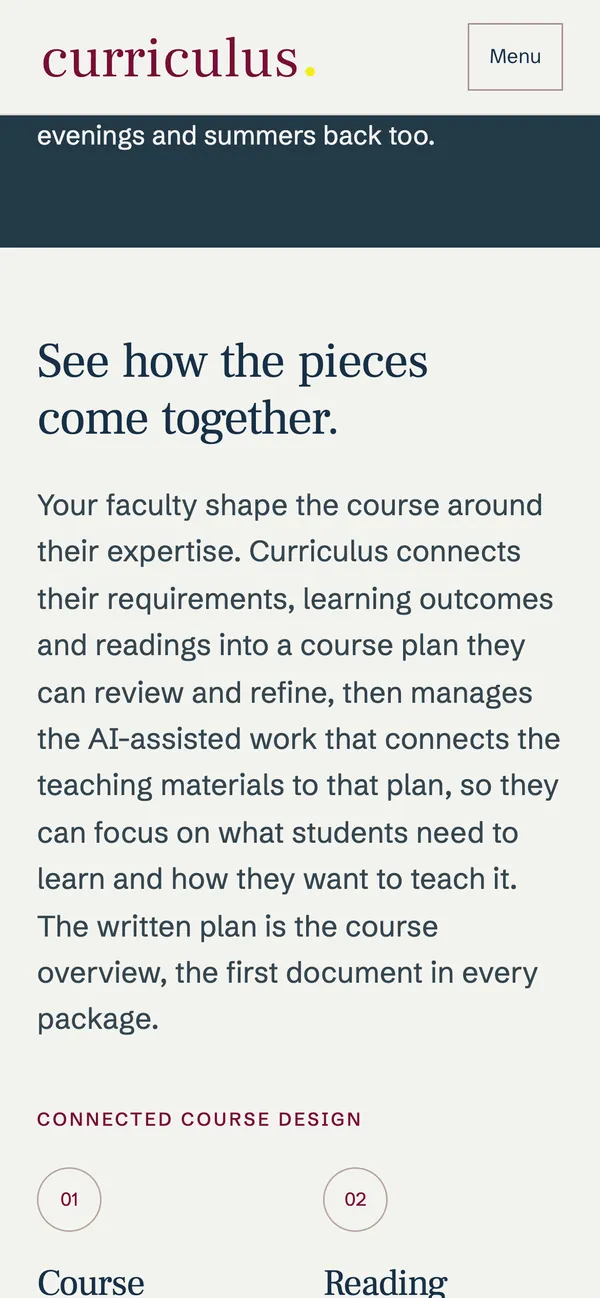
Four steps from a starting point to finished materials, written so faculty can see they shape the course and Curriculus puts it together.
- 02
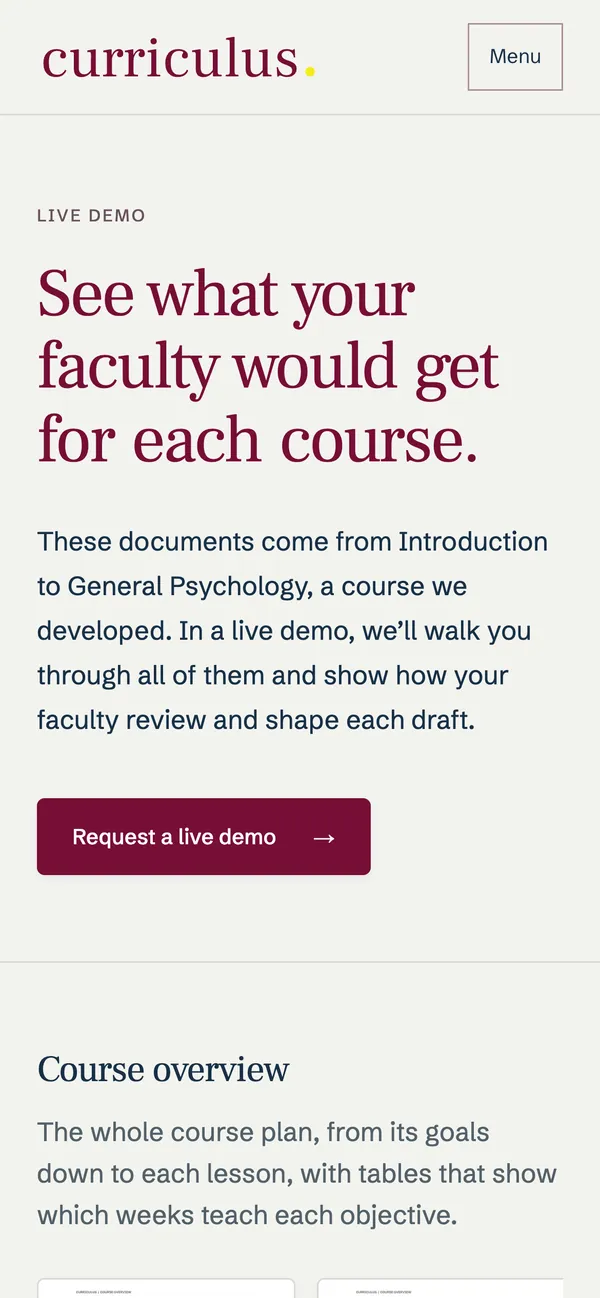
Live demo
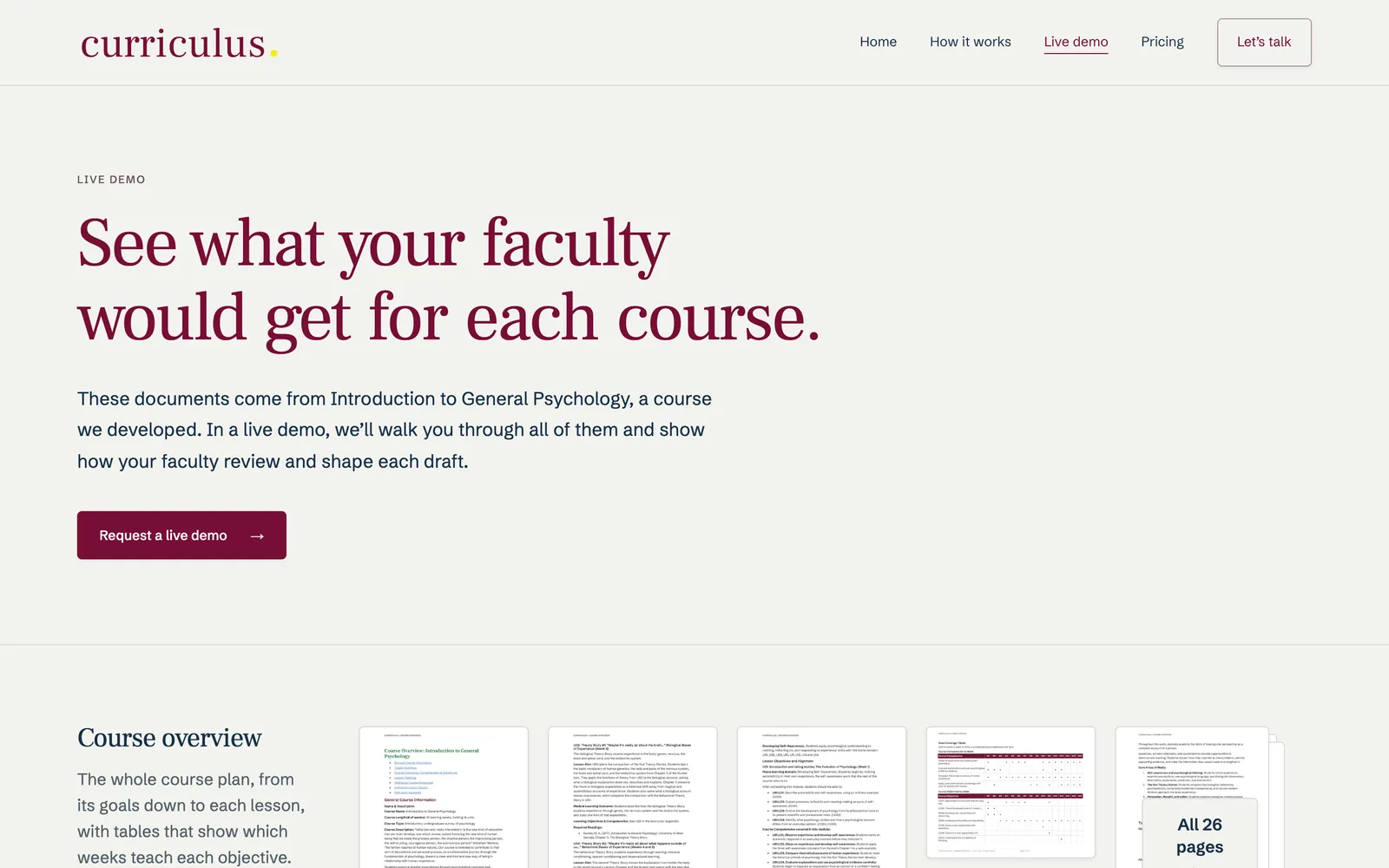
The course overview and the first pages of the lesson guides, assessments and teaching deck from a real Introduction to General Psychology course.
- 03
Pricing estimator
Prices per course type, an estimate builder for several courses and a comparison with university design teams and faculty building courses alone.
- 04
A contact page that qualifies
The form asks what the department is planning, leaves room for a copied estimate and promises an email reply within 24 hours.
The Stega fix
Let the course materials do the selling.
Departments buy course development carefully. We gave them the documents, the numbers and the next step, and kept the claims short.
Real materials on the page
A sample course says more than any description of one. The demo shows the actual pages a faculty member would receive.
A price you can work out
Visitors see the price per course and build their own estimate, so the first call is about courses instead of budgets.
Faculty stay the experts
Every page says who decides what. The faculty set the academic direction, and Curriculus runs the work between their reviews.
Stega initiatives
What we are proposing next.
The site is live. These are the improvements we are proposing from here.
Funnel tracking
Next we are proposing analytics on the estimate, demo request and contact steps, so we can see where departments stop.
More sample courses
The demo page is built around one course today. We want to add examples from other subjects so more departments see their own field.
Answers AI tools can quote
Pages already carry links to summarise them in Claude, ChatGPT and Copilot. Next we are proposing structured data on the FAQs and pricing so those summaries stay accurate.
Toolstack
The tools behind it.
- WebflowThe whole site, editable by the Curriculus team.
- FigmaPage layouts and the estimator design before build.
- JavaScriptThe pricing estimator and the copy-your-estimate step.
- Webflow FormsThe contact form, with clear sent and failed states.